How a perfume is born: from Raw Materials to the Bottle
THE FSSA1561 BLOG
_
Written by: Elena Azzerlini
How a perfume is born: from Raw Materials to the Bottle
Niche perfumery comes to life through the intersection of art and science. It is a creation where the most refined chemical expertise meets the profound olfactory sensitivity of the "nose" and a rigorous production process. This discipline transforms select raw materials into a singular, unforgettable sensory experience. Every fragrance is, therefore, a true work of art,a structure built with precision, emotion, and masterful skill.
Stepping into this sophisticated landscape is Farmacia SS. Annunziata 1561 (FSSA1561), a historic maison with deep roots in the Florentine Renaissance.
With a long-standing tradition of knowledge and formulations, FSSA1561 acts as a custodian of artisanal methods passed down through the centuries. Today, we reinterpret these ancient techniques with a dynamic, contemporary spirit.
Every one of our niche fragrances is a testament to authenticity, dedicated research, and an enduring artisanal approach that continues to define the very identity of our brand.
The origin of creation: raw materials
Raw materials are the creative core of artistic perfumery.
The quality of these ingredients—the result of meticulous selection, dedicated research, and expert technical skill—fundamentally determines the personality of every fragrance.
Each ingredient carries its own profound story, woven from unique aromatic characteristics and sophisticated processing methods that enhance its purity and complexity. This isn't just about combining scents; it's about honoring the material itself.
Through continuous research, we refine the selection of our raw materials, ensuring we achieve increasingly layered, nuanced, and truly innovative olfactory results. This commitment to the finest quality is what allows us to transform simple ingredients into emotional experiences.
The importance of natural and synthetic raw materials
Raw materials are the heartbeat of artistic perfumery. They are the origin of the olfactory emotion and the starting point for every masterful composition. Their quality is the result of a delicate, essential balance between nature, research, and expert savoir-faire.
Natural essences owe their uniqueness and prestige to a complex dance of factors: seasonality, cultivation methods, climate, and often, the scarcity of the raw material from which they are extracted.
Each harvest carries a distinct nuance and depth. This natural variability is not a flaw; it is a precious value that lends our fragrances their authenticity, their vivid vibration, and their unique life.
Alongside our cherished natural materials, high-quality synthetic molecules represent the most advanced result of scientific research.
These molecules are an extension of the perfumer's palette: they allow us to recreate notes that are rare or impossible to extract naturally, guarantee stability and precision, promote sustainability, and open up creative spaces that would be impossible to achieve with natural ingredients alone.
In artistic perfumery, these two worlds do not stand in opposition. Instead, they meet, they converse, and they complete each other, forming the rich, complex tapestry of a truly memorable scent.
Olfactory evaluation and quality control
The work of the perfumer or Nose, is the perfect bridge between sensorial perception and technical expertise. Olfactory evaluation requires a profound, intimate knowledge of essences—their nuances, and how they evolve over time.
First and foremost, the Nose must be able to recognize and distinguish hundreds of raw materials, understanding their intensity, persistence, and behavior within a complex formula. Furthermore, they must possess olfactory imagination, meaning the ability to envision new accords and explore uncharted creative possibilities.
How to Conduct an Olfactory Evaluation
For an objective olfactory assessment, the surrounding environment must be neutral, free from competing scents (food, detergents, etc.).
- Preparation: Tests are conducted on mouillettes, or neutral blotting strips.
- Initial Assessment: The evaluation begins a few seconds after spraying to allow the alcohol to evaporate and the Top Notes to emerge.
- Evolution: The strips are then re-tested after 5, 10 minutes, and 30 minutes. This crucial period allows the fragrance to evolve, revealing the heart (Heart Notes) and anchoring it with the base (Base Notes).
The Science Behind the Scent
To ensure that a fragrance is truly flawless, our laboratories adhere to rigorous Quality Control protocols, utilizing cutting-edge chemical and dermatological testing.
Rigorous Chemical Analysis
- Stability Tests: We verify how the fragrance changes over time and under different conditions (light, heat) to ensure longevity and consistency.
- Regulatory Compliance: We conduct dermatological and safety tests to meet European standards and IFRA guidelines.
- pH Determination: Essential for skin compatibility.
- Alcohol Content Measurement: Precisely measured for category compliance (e.g., Eau de Parfum, Parfum).
- Gas Chromatography-Mass Spectrometry (GC-MS): This molecular scanner is the ultimate detective, identifying and quantifying every single ingredient. It confirms the exact formula and guarantees the absence of any contaminants.
These exhaustive analyses are what ensure the quality, safety, and brilliance of every bottle we produce.

The creative process: when the olfactory pyramid takes shape
An olfactory idea often originates from a spark, a conceptual, emotional, or visual inspiration that serves as the initial stimulus. Creating a fragrance is not merely about mixing scents; it is about translating an abstraction, a memory, a place, or a profound emotion, into a precise chemical and evocatively sensory language.
Understanding the Notes
The notes are the fundamental elements of this translation. They are classified into the classic Olfactory Pyramid structure to govern the perfume’s persistence and development over time:
- Top Notes: These are light and volatile (e.g., citrus). They provide the initial burst and create the very first impression of the fragrance.
- Heart Notes: This is the central theme and true personality of the perfume (e.g., florals, spices). They emerge as the top notes fade.
- Base Notes: These are intense, anchoring notes (e.g., woods, resins). They act as a fixative, guaranteeing the longevity and depth of the fragrance on the skin.
The olfactory idea and the creative brief
The Nose selects and combines natural and synthetic raw materials, formulating an initial olfactory draft. This initial concept is then rigorously tested and modified based on feedback from fragrance evaluators or the client.
The Nose then proceeds to painstakingly refine the composition, testing crucial factors such as:
- Volatility: Ensuring the notes unfold beautifully over time.
- Sillage: Perfecting the scent trail and projection of the fragrance.
- Harmony of the Notes: Guaranteeing that every element is balanced and cohesive.
This cycle of creation, testing, and refinement continues until the perfect, resonant expression of the initial vision is finally achieved. It is where artistry meets unwavering dedication to detail.
Composition: top, heart and base notes
The work of the master perfumer, or the Nose, is a meticulous art built upon the essential principle of proportionate balance.
Creation takes place through a blend of natural and synthetic raw materials, where proportions are calibrated precisely, down to the milligram.
This crucial process requires countless trials and modifications to flawlessly balance the Top, Middle, and Base Notes. The goal is twofold: to guarantee perfect persistence (how long the scent endures on the skin) and optimal sillage (the captivating, perceivable trail).
The evolution over time is crucial: the perfume must unfold harmoniously and coherently, fully revealing its identity from the very first spray to the final, lingering dry-down.
To learn more about the balancing and development of Top, Middle, and Base notes, you can consult our dedicated article here.
Olfactory trials and maturation
After the mixing phase, the perfume undergoes three crucial steps to refine its ultimate quality and character:
1. Maceration
The essence and alcohol are allowed to rest together for several weeks. This is the period of quiet integration where the magic truly begins.
2. Resting (or Aging)
The aromatic molecules bond deeply with the alcohol, fusing into a single, seamless, homogeneous solution.
3. Stabilization
The final olfactory profile settles. This phase mitigates the most volatile Top Notes while intensifying the depth and complexity of the Middle and Base Notes.
This entire maturation process is vital because the perfume evolves chemically. It is only after these weeks of patient resting that the fragrance truly reaches its final harmony, depth, and intended character.

From formula to laboratory: the production of perfumes
Perfume production is a complex art that transforms an abstract idea into a tangible sensory experience.
It begins with a strong concept and the scrupulous selection of raw materials, both natural and synthetic. The Master Perfumer then meticulously balances these essences in precise proportions to construct the Olfactory Pyramid (Top, Middle, and Base Notes).
Following the initial blending, the fragrance undergoes crucial refinement through maceration and resting. This stabilizes the scent's character, guaranteeing perfect harmony, optimal persistence, and an enchanting sillage.
The final quality control ensures total compliance and adherence to the highest standards, delivering a finished product that is nothing less than a masterpiece.
Precise mixing and weighing
The creation of a perfume is a meticulous technical process that begins with the weighing of every single ingredient that will constitute the final essence.
Precision is paramount: every formula is a guarded secret that must be reproduced with millimeter-level accuracy to guarantee the flawless repeatability of the product across every batch.
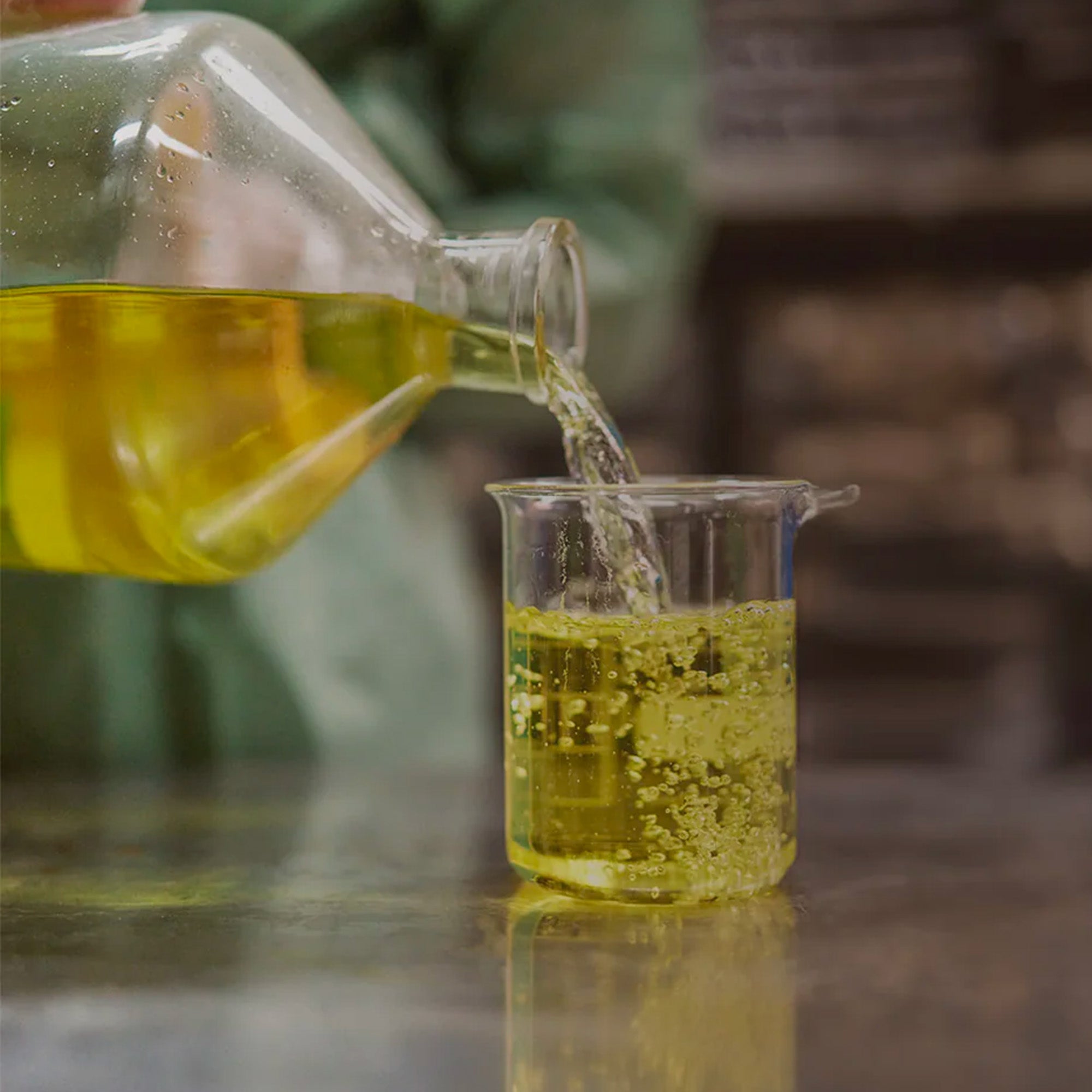
Next, the essences are carefully blended to create the perfume concentrate—the very soul of the fragrance. The final stage is the dilution of this concentrate in an alcoholic base (usually ethyl alcohol), which serves as the crucial carrier. This final mixture is then left to mature before the final filtration and bottling, ensuring the scent is fully integrated and ready to captivate.
Maturation in stainless steel tanks
After the delicate blending of essences and dilution into the alcohol base, the perfume must undergo a resting period known as Maceration, which can last from several weeks to several months.
This time is essential for the full chemical integration of the aromatic molecules with the alcohol base.
The benefits are crucial:
- Roundness: The perfume gains a beautiful, harmonious roundness.
- Perfect Harmony: The complete and perfect synergy between the Top, Middle, and Base Notes is finally achieved.
- Full Stability: The fragrance reaches its full olfactory stability, ensuring the scent is complex, deep, and will not alter over time.
This patient wait is what transforms a simple mixture into a finished fragrance of profound depth and lasting character.
Filtration and final quality check
Following the essential resting and maturation period, the perfume must undergo a critical filtration process to remove all impurities and insoluble residues.
The most common method is Cold Filtration:
- Chilling: The alcoholic perfume solution is brought down to very low temperatures.
- Precipitation: This chilling process causes less soluble substances—particularly the natural waxes and pigments—to precipitate.
- Filtration: The cold liquid is then passed through extremely fine filters to trap these particles.
This step is crucial for achieving a fragrance that is perfectly limpid, brilliant, and stable over time.
Final Inspection and Bottling
Before the final bottling, the perfume undergoes rigorous checks to ensure absolute consistency and safety. Visual analyses, stability tests, and sensorial evaluations are all meticulously conducted before the product is finally packaged and ready to be discovered.
Bottle design: aesthetic, functionality, identity
Following the meticulous chemical process of creation, we enter the final phase: the fragrance's attire.
The bottle’s design is the synthesis of aesthetics, functionality, and, above all, brand identity. It is the visual element that translates the abstract olfactory emotion into tangible form. From the selection of the glass to the silhouette of the bottle, every detail communicates the brand's story and personality.
Through the packaging, the artistry of the liquid content meets the art of design, elevating the overall sensory experience from a simple scent to a piece of treasured luxury.
The role of packaging in artistic perfumery
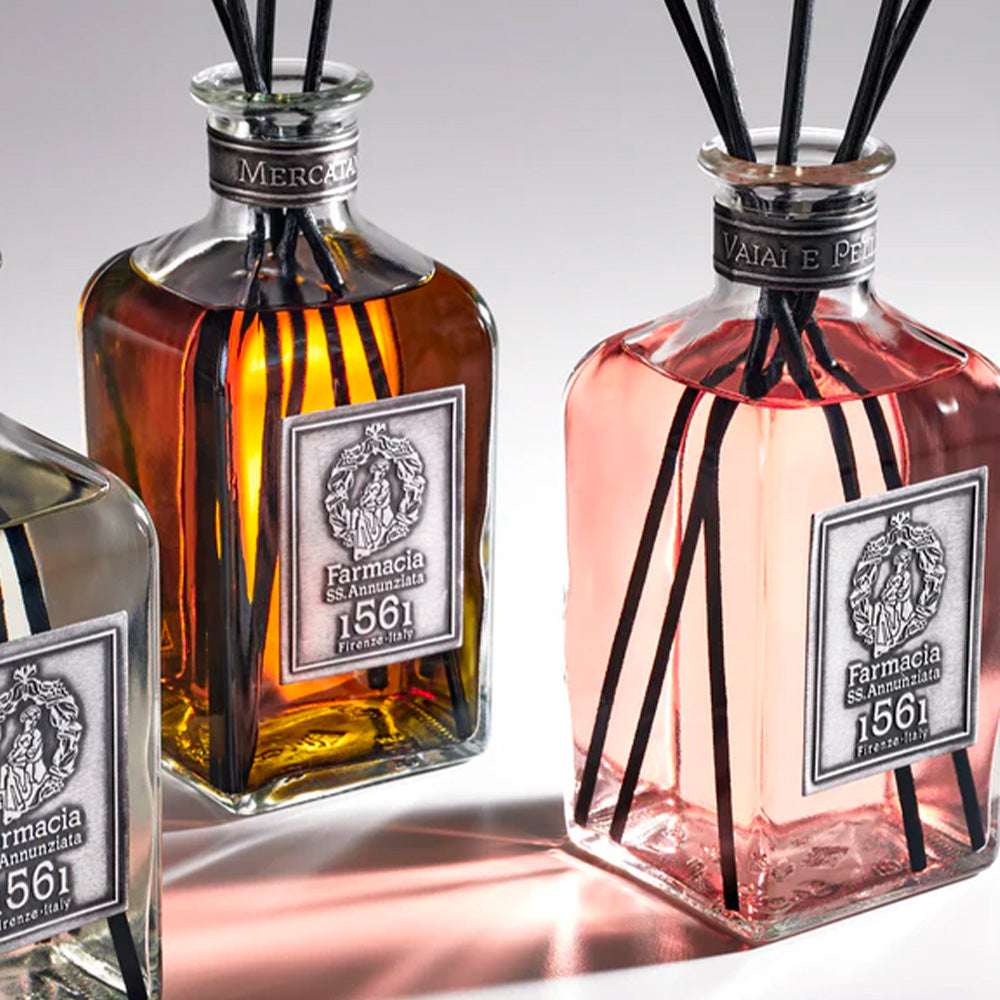
The bottle is the consumer's very first sensory interaction and a critical element in the overall perfume experience. It is not merely a container; it is a visual and tactile extension of the fragrance itself.
The chosen materials and forms are never arbitrary—they reflect the very DNA of the brand. A minimalist design suggests purity and modernity, while elaborate shapes evoke specific creativity or narratives.
Crucially, the aesthetic choices must be coherent with the perfume's olfactory character, transforming the flacon from a simple object into a cherished collector's symbol.
Bottling and sealing
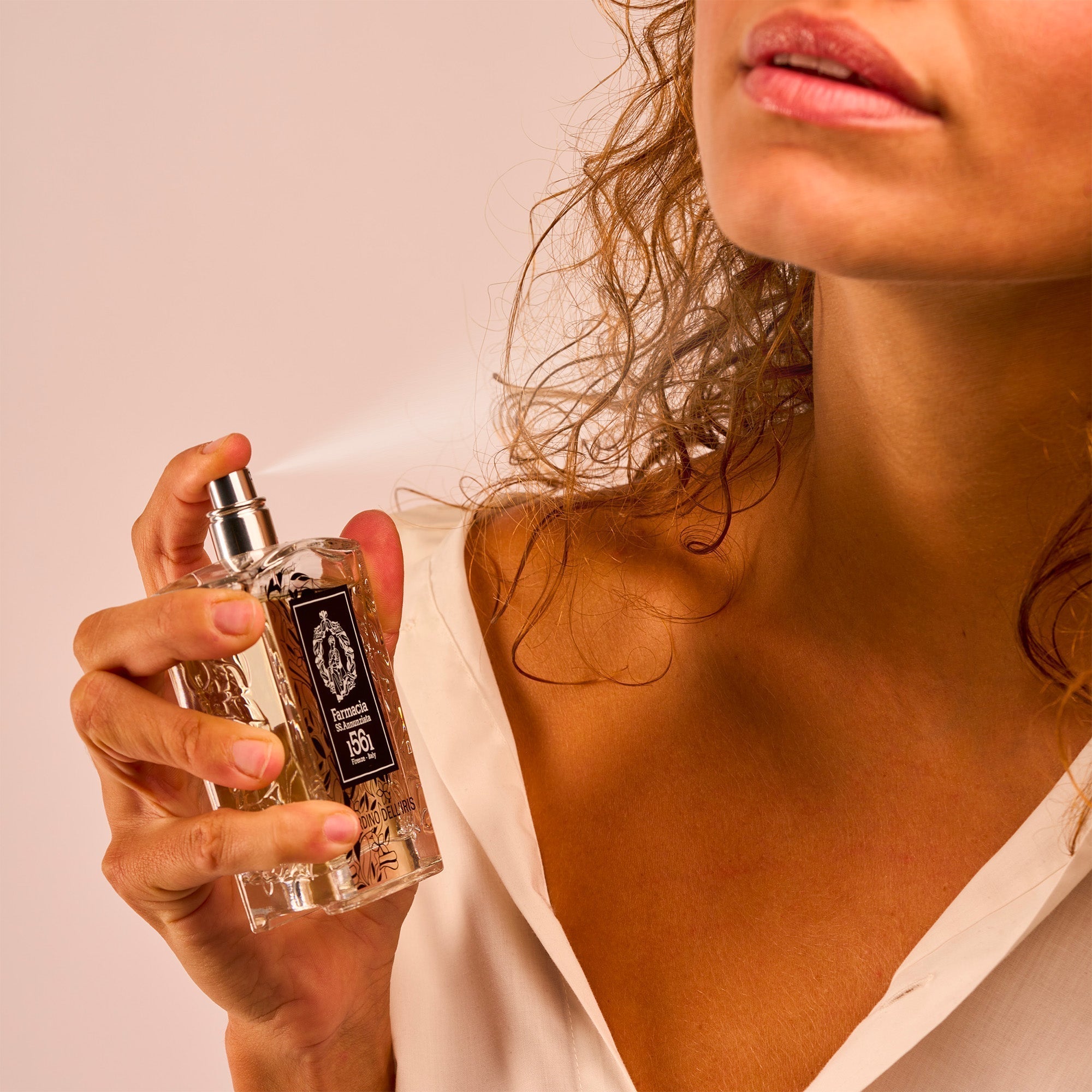
Perfume production on a smaller scale, as is often the case for niche brands, is never fully automated. This is a deliberate choice: we embrace a manual or semi-industrial process that maintains the highest level of craftsmanship and control.
This approach strikes a crucial balance between efficiency and uncompromising quality:
- Manual Setup: Machinery used for filling, for instance, does not run continuously. It requires precise human intervention for the initial setup, calibrating the machine with millimetric precision for the exact volume needed.
- Controlled Filling: The specialized operator supervises or adjusts the machine, often filling one bottle at a time, guaranteeing the exact same quantity of liquid and perfect sealing for every single flacon.
- Flexibility: This system offers greater flexibility, allowing us to manage smaller, high-quality batches without sacrificing the uniqueness of the product.
This blend of modern precision and human expertise ensures that every bottle holds the same consistent quality and artisanal care.

The art and science of perfumery: the Farmacia SS. Annunziata method
Behind every bottle of perfume lies a fascinating story: a delicate balance between centuries-old artistry and rigorous contemporary science.
Far more than a simple blend of essences, the creation of a niche fragrance is a meticulous journey—an act of patience that demands absolute dedication, technical precision, and a profound, intimate knowledge of the raw materials.
460 years of savoir-faire
Florentine perfumery boasts a tradition that spans over four centuries, a historical legacy rich in artisanal savoir-faire.
Our production of niche fragrances is founded on modern formulas that demand maximum precision and patience. This heritage is not static: today, it seamlessly combines with modern technologies, such as advanced cold filtration and sophisticated laboratory analysis.
We maintain the mastery of the past and the precision of the future to create fragrances that not only honor our history but also guarantee impeccable, future-proof quality.
An artisanal and contemporary approach
Our commitment to quality translates into an extremely controlled production process. This control ensures authenticity at every single stage, beginning with the first creative spark - the brief - and through the entire creation and maceration of the perfume.
Even the subsequent bottling is performed using a hands-on, manual approach, with meticulous settings applied for every individual flacon.
Maintaining control over every single step allows us to seamlessly merge the flexibility and attention to detail of true craftsmanship with the scientific precision demanded by contemporary perfumery.
Conclusion: the Journey of a perfume, from raw material to skin
The journey of a niche perfume is a fascinating and meticulous voyage, beginning with the selection of the raw material and concluding only when the fragrance settles upon your skin.
Every single stage, from the precise weighing to the long resting period, from filtration to the final quality checks, represents a promise of excellence.
The final niche fragrance becomes a perfect synthesis of art and science. It is a work that demands technical precision yet conveys pure emotion. With our historical savoir-faire and our dedicated artisanal attention, we guarantee that every spritz is not just a perfume, but a fragment of our Florentine history, ready to become a part of yours.